
Call us: 07749674445

The genuinely eco-friendly methods are dry compound cleaning, encapsulation (including iCapsol-style products), and soap-free low-moisture extraction, since all three use minimal water, skip harsh solvents, and leave little residue behind. For a full deep clean or delicate wool carpets, book a certified professional. For small spills or refresh jobs, a soap-free, low-moisture approach at home does the job safely.
TL;DR:
- Professional encapsulation and soap-free extraction methods cut water use and drying times while effectively removing dirt without chemical residues.
- DIY eco-friendly cleaning options like baking soda and vinegar are suitable for small spills but may cause damage or leave residues if overused on delicate fibers.
- Ask cleaning providers for specific certifications such as WoolSafe and Green Seal GS-37, and inquire about wastewater handling and drying times to verify eco-claims.
- Most home methods fail to control moisture properly, leading to longer drying times and increased risk of mold or re-soiling, making professional treatment more reliable.
- Be cautious of vague marketing terms; always seek detailed answers about product safety, certification, and cleaning process to avoid greenwashing.
Table of Contents
- What is eco-friendly carpet cleaning, exactly?
- How do the main eco cleaning methods actually work?
- How do you choose a genuinely eco-friendly professional?
- Can you clean carpets eco-friendly at home yourself?
- Why professional cleaning still beats most DIY attempts
- What most homeowners get wrong about green cleaning
- Book an eco-friendly carpet clean with Swc-cleaning
- Where to verify eco cleaning claims yourself
- Sources
What is eco-friendly carpet cleaning, exactly?
Eco-friendly carpet cleaning means using products and processes that cut back on toxic chemicals, water waste, and leftover residue, without sacrificing the actual clean. That last part matters. A method that’s gentle on the planet but leaves carpets grubby or attracts dirt back within a fortnight isn’t eco-friendly, it’s just slower to fail.
The industry term for most of this is low-moisture cleaning, sometimes labelled green carpet cleaning or non-toxic carpet cleaning in consumer marketing. They’re describing the same family of techniques: methods that avoid soap residues, optical brighteners, phosphates, and strong solvents, all of which either pollute wastewater or leave a sticky film that traps more dirt than it removes.
Here’s a fast way to work out what you actually need:
- Whole-house deep clean, heavy soiling, or pet stains: call a certified professional using encapsulation or soap-free extraction.
- Wool, silk, or antique rugs: always use a WoolSafe-approved cleaner or product. Never guess with a household remedy.
- Small spot or spill, low soiling: a soap-free, low-moisture DIY method is usually fine.
- Musty odours without visible stains: dry compound methods or a baking soda treatment often solve it without any liquid at all.
- Before cleaning starts: open windows, ventilate the room, and keep children and pets out until surfaces are dry to the touch.
If you’re unsure which category your carpet falls into, treat it as the more cautious option. Wool always wins that argument.
How do the main eco cleaning methods actually work?
Four techniques dominate the eco-friendly space, and they solve different problems.
Dry compound cleaning uses an absorbent, biodegradable powder worked into the carpet with a machine, then vacuumed out along with the dirt it’s captured. There’s no drying time because there’s no moisture. It’s the fastest option and works well for offices or homes that can’t tolerate downtime, though it’s less effective against deep, greasy stains.
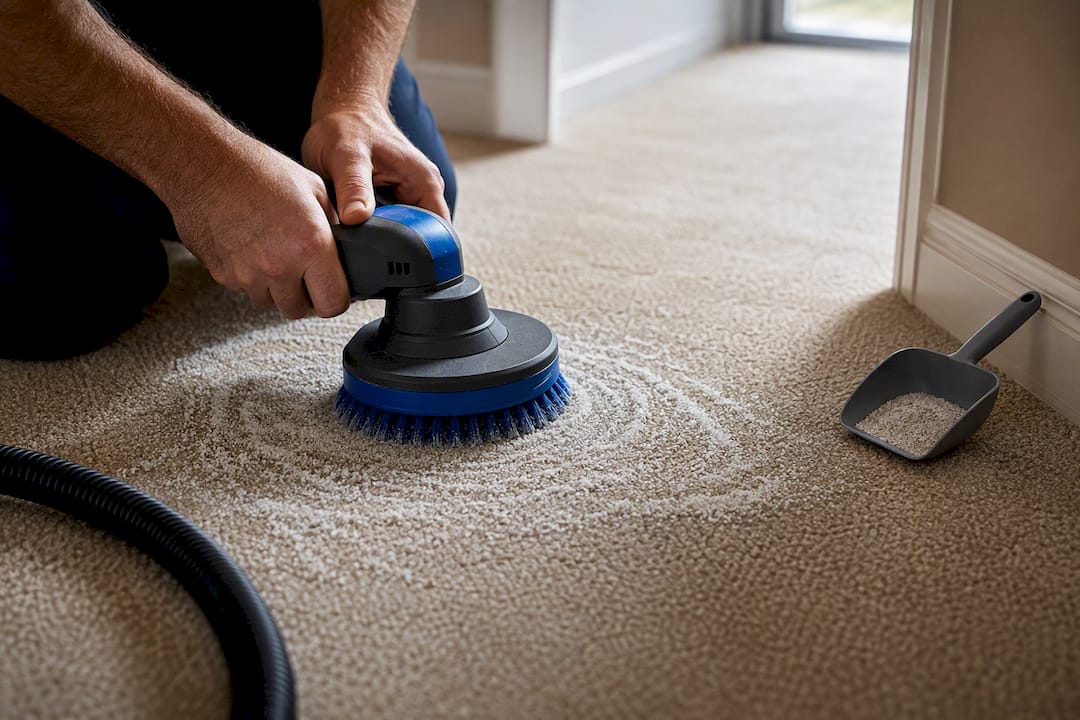
Encapsulation is where a lot of the recent innovation sits. A cleaning agent surrounds soil particles and, as it dries, crystallises them into a brittle residue that vacuums away cleanly rather than needing to be rinsed out. Kärcher’s CarpetPro Natural Cleaner using iCapsol technology is a well-known example of this chemistry in action. Because there’s minimal rinsing involved, it cuts both water use and drying time significantly compared with traditional hot-water extraction.
Soap-free extraction tackles the residue problem head-on. Products like Soap Free Procyon skip detergents and optical brighteners entirely, so nothing sticky is left behind to attract new dirt. This matters more than most homeowners realise: a soapy residue is often why carpets look dirty again within weeks of a clean.
Hot-water extraction with an eco-certified detergent can still be acceptable, but only if the technician rinses thoroughly and handles wastewater responsibly. Done badly, it’s the method most likely to leave chemical residue in the pile.
A carpet that recoils within weeks usually isn’t dirty again, it’s still carrying detergent from the last clean, which attracts new dirt faster than bare fibre would.
Wool and other delicate natural fibres need particular care. Even mild household acids can affect dye stability and fibre strength, so WoolSafe accreditation is the safest way to confirm a product or cleaner won’t damage them.
How do you choose a genuinely eco-friendly professional?
Most “eco” claims on a cleaning company’s website are marketing, not proof. The way round that is to ask direct questions before you book, not after.
- What certification does your product carry? Ask by name, not category. Green Seal’s GS-37 standard independently tests cleaning products for safety and effectiveness, and it’s a genuine indicator, not a self-awarded badge.
- Is the product WoolSafe-approved, especially if you have wool carpets or rugs?
- Do you rinse, or rely on encapsulation? Both are valid, but the technician should know which one they’re using and why.
- How is wastewater handled? A vague answer here is a warning sign.
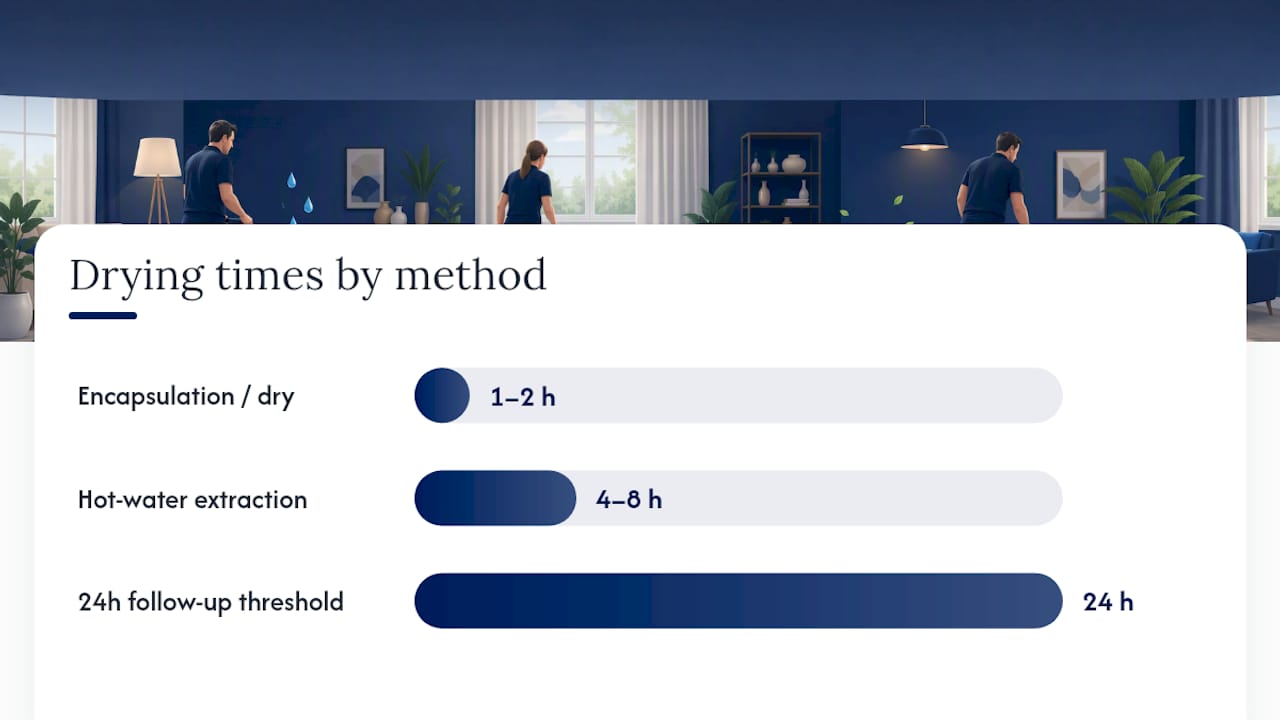
- How long will drying take? Encapsulation and dry compound methods typically leave carpets dry within one to two hours. Hot-water extraction, even done well, can take four to eight hours to fully dry.
Technician skill and equipment maintenance often matter more than which bottle they’re carrying. A well-trained operator using a moderately eco product, applied correctly with proper moisture control, will usually outperform an untrained one using a premium certified product badly.
Pro Tip: Ask what happens if the carpet still smells damp after 24 hours. A confident, specific answer (fans, dehumidifiers, follow-up visit) tells you more about competence than any product label does.
On pricing, expect variation by room size, soil level, and whether stain treatment is needed on top of the standard clean. Straightforward maintenance cleans cost less than jobs involving pet odour removal or deep-set staining, which usually need extra passes and time.
Greenwashing red flags worth watching for: vague words like “natural” or “green” with no named certification behind them, reluctance to name the actual product used, and any cleaner who can’t explain their drying-time expectations.
Can you clean carpets eco-friendly at home yourself?
For light jobs, yes, and it doesn’t need to involve harsh chemicals.
- Vacuum thoroughly first. Loose soil is what makes stains harder to shift and wastes more cleaning solution than necessary.
- Spot-test any solution on a hidden patch of carpet and wait ten minutes before treating a visible area.
- Use baking soda for odours. Sprinkle, leave for several hours, then vacuum. No chemicals, no drying time, and it works surprisingly well on pet smells.
- For spot stains, use a dilute vinegar solution sparingly, never full-strength, and never on wool or natural fibres without testing first.
- Avoid repeated soapy shampoo treatments. Each one adds more residue than the last removes, which is the opposite of what you want.
- If using a rental or home carpet machine, dilute correctly and keep passes short. Excess moisture is the main cause of mould smells and long drying times.
If a stain hasn’t shifted after two careful attempts, or if you’re dealing with wool, stop. Repeated DIY passes tend to push stains deeper or damage the fibre, and that’s when a professional visit becomes the cheaper option overall.
Why professional cleaning still beats most DIY attempts
DIY methods handle small jobs well, but professional equipment applies consistent moisture control that’s hard to replicate with a rental machine. Swc-cleaning uses eco-friendly products and trained technicians across its carpet and upholstery cleaning services, which is the combination that actually determines whether a “green” clean holds up over time. Technique paired with the right product, applied by someone trained to read the fibre in front of them, tends to outperform a good product used carelessly.
What most homeowners get wrong about green cleaning
Most people assume “natural” means “safe for everything,” and that’s the mistake worth correcting first. A lemon-based spot treatment might be gentle enough for polyester but can strip dye from wool within minutes. Read labels for named certifications, not adjectives.
Second, ask two questions before booking any cleaner: which certified product will they use, and how do they control moisture and drying time? Answers that are specific beat answers that sound reassuring.
— Scott
Book an eco-friendly carpet clean with Swc-cleaning
There are services offering alternatives to guessing your way through DIY treatments or gambling on a cleaner who can’t name their own products. Every carpet and upholstery job uses eco-friendly products chosen for the fibre in front of the technician, often backed by a service guarantee that means you’re not stuck if the result falls short.
Whether you need a full house refresh, an end-of-tenancy carpet clean, or a targeted treatment for pet stains, the services page outlines exactly what’s covered and how quoting works. Getting a price is straightforward: describe the rooms, the carpet type, and any specific stains, and you’ll get a shape of cost before anyone steps through the door. If you’d rather talk it through first, get in touch via the main site to check availability and request a quote for your property.
Where to verify eco cleaning claims yourself
Trust the certification bodies directly rather than a company’s own description of them.
- WoolSafe for accreditation standards covering wool and delicate natural fibres.
- Green Seal’s GS-37 standard for independently tested cleaning product safety and performance.
- Kärcher’s iCapsol product page for how encapsulation chemistry actually works.