

Call us: 07749674445

A professional deep clean covers everything a routine visit skips: inside ovens and fridges, extractor fans, grout and limescale, behind and under furniture, upholstery, curtains, light fittings, vents, and every window sill and frame. Cleaners move items rather than clean around them, reaching surfaces that go untouched for months. Firms such as Swc-cleaning offer this as a distinct, itemised service, separate from a standard maintenance clean.
TL;DR:
- Deep cleaning involves moving furniture and appliances to thoroughly clean neglected areas like behind and under objects, which routine cleaning rarely addresses.
- Tasks such as oven degreasing, grout scrubbing, machine scrubbing floors, and high dusting can extend cleaning times to four or more hours for an average home.
- High-touch surfaces, bins, and storage spaces like closets and wardrobes require dedicated attention to prevent bacteria buildup and unpleasant odors.
- Deep cleaning costs depend on property size, condition, added services, and access issues, making itemized quotes essential for accurate pricing.
- Proper preparation, like decluttering and securing valuables, ensures a smooth deep clean, while clarifying specific needs helps avoid unmet expectations.
Table of Contents
- What is included in a deep clean, room by room
- Deep clean vs. regular clean: what’s actually different
- How often to book one, and what it typically costs
- How to prepare for deep cleaning day
- Sanitising high-touch areas most cleans miss
- Cleaning and disinfecting bins and recycling containers
- Closets, wardrobes and storage areas
- Wall wiping and spot cleaning
- Skirting boards, door frames and switch plates
- What we prioritise in a deep clean
- Get an accurate deep clean quote from Swc-cleaning
- Sources
What is included in a deep clean, room by room
A deep cleaning scope of work reads less like a tidy and more like a full reset, moving furniture and appliances to reach the grime that builds up behind them. Here’s what that looks like room by room.
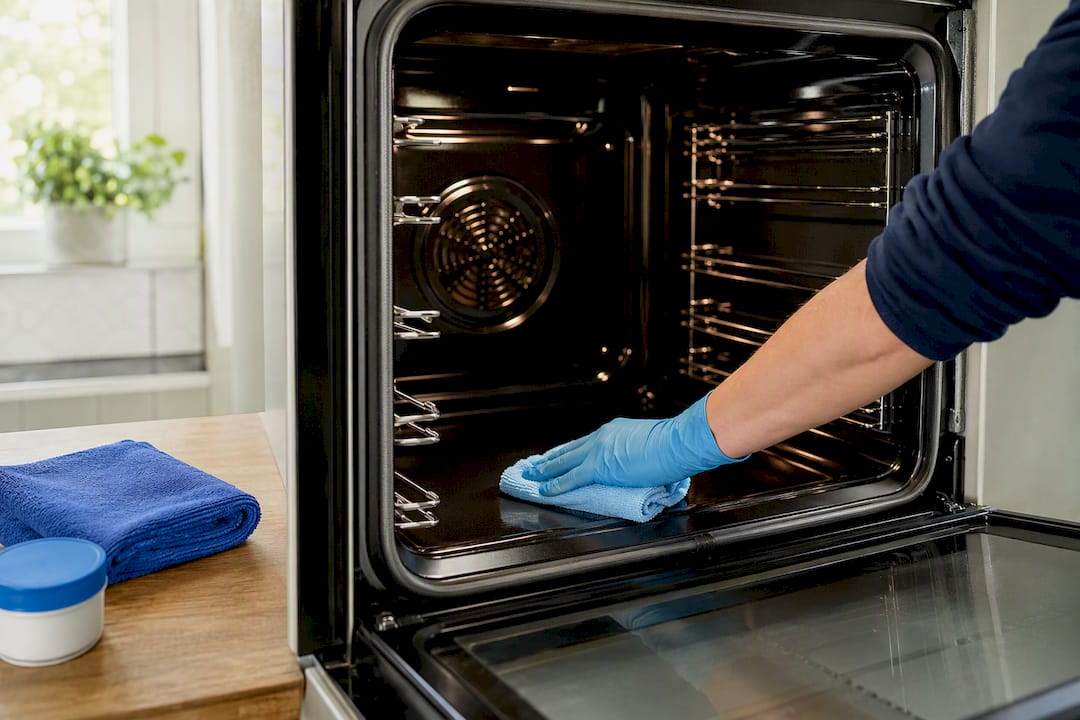
Kitchen. This is where deep cleaning earns its name. Expect the inside of the oven scrubbed and degreased, the fridge emptied and wiped down (including door seals and drawer runners), the microwave descaled inside and out, and the extractor fan filter soaked and cleaned. Cabinet fronts get wiped for grease film, the splashback is scrubbed, taps and sinks are descaled, countertops are cleared and disinfected, and the floor gets a proper deep scrub rather than a quick mop.
Bathroom. Grout lines get scrubbed by hand or with a specialist tool, not just wiped over. Limescale comes off taps, shower heads and glass screens. The toilet gets a full strip down including the base and cistern top, tiles and grout are treated together, mirrors are polished streak-free, and extractor vents get wiped clear of dust and mould spores.
Living rooms and bedrooms. High dusting covers picture frames, curtain rails and light fittings that routine cleans never reach. Blinds get wiped slat by slat; curtains are either laundered or thoroughly vacuumed. Interior windows and sills are cleaned properly, upholstery is vacuumed and spot treated for stains, and mattresses get a vacuum and, where appropriate, a light spot clean (a full mattress steam clean is usually a separate add-on).
Floors and carpets. Hard floors get machine scrubbed rather than mopped, which lifts embedded grime that a mop just pushes around. Carpets are steamed or shampooed depending on fibre type, and furniture gets moved so cleaners can vacuum underneath rather than skirting round the edges.
High and hidden areas. This is the part most homeowners forget to ask about: light fittings, the tops of cabinets and wardrobes, air vents and returns, and the gap behind radiators where dust collects for years undisturbed.
Soft furnishings and laundry. Depending on the package, cushion covers may be laundered, rugs cleaned or sent for specialist treatment, and bedding washed as part of the visit. Complete deep-clean checklists from established home authorities consistently list curtains, sills and appliance interiors as standard inclusions, not extras.
Ventilation. Cleaners will wipe visible vent covers and grilles and vacuum dust from accessible ductwork edges. Replacing HVAC filters, however, is usually the property owner’s job or a specialist HVAC contractor’s, since it often needs the right filter size and system knowledge.
A few tasks are commonly optional rather than automatic, and it’s worth knowing this before you compare quotes:
- Exterior window cleaning — usually priced separately, since it often needs different equipment or access
- Full oven deep clean — sometimes a standalone add-on even within a “deep clean” package, because it’s labour intensive
- Mould treatment — treated as remedial work rather than routine deep cleaning, especially if it’s extensive
- Carpet shampooing — occasionally quoted per room rather than bundled into the base price
Deep clean vs. regular clean: what’s actually different
The difference between deep clean and regular clean comes down to what gets moved and how far into the corners the cleaning goes. A routine clean maintains what’s already tidy: surfaces, floors, bathrooms and kitchens in everyday use. A deep clean resets neglected areas that build up grime over weeks or months.
| Task area | Routine clean | Deep clean |
|---|---|---|
| Kitchen | Wipe surfaces, empty bins | Inside oven, fridge, extractor, cabinet fronts |
| Bathroom | Wipe visible surfaces | Grout scrubbing, limescale removal, tile treatment |
| Floors | Vacuum/mop open areas | Machine scrub, move furniture, clean underneath |
| Windows | Rarely touched | Interior glass, sills and frames |
| Vents/fittings | Skipped | Wiped and dusted |
For a small to medium home, a deep clean typically takes considerably longer than a routine visit, often four to eight hours depending on size and condition, compared with an hour or two for a standard clean. Offices scale similarly: a deep clean outside working hours or over a weekend lets cleaners work through desks, communal kitchens and washrooms without disrupting staff.
Once a deep clean has reset a property, subsequent routine cleans become faster and more effective, since there’s less accumulated grime to fight through each visit.
One caveat worth flagging: a deep clean is not the same as specialist remediation. Biohazard clean-up, structural mould removal, or major water damage restoration need different training, equipment and, often, certification, so don’t expect a standard deep clean quote to cover them.
How often to book one, and what it typically costs
For homes, A deep clean every few months keeps grime from becoming an ongoing problem, with more frequent visits suiting households with pets, young children or allergy sufferers. Offices generally need deep cleaning based on footfall: a busy shared workspace might need one quarterly, while a smaller office with fewer visitors can often stretch to twice a year.
Costs and durations vary by property size and condition, so treat any figure as a guide rather than a quote. A few factors reliably push the price up:
- Number of rooms and total floor area
- General state of the property (first deep clean after years of neglect costs more than a maintained home)
- Specialist add-ons like oven detailing or carpet shampooing
- Access issues, parking restrictions or travel charges for the cleaning team
When you request a quote, ask for it itemised. A proper quote should specify the exact scope covered, how many cleaners will attend, expected duration, whether they bring eco-friendly or non-toxic products on request, and confirmation of insurance. Vague quotes lead to disputes later about what was and wasn’t included.
How to prepare for deep cleaning day
Preparation makes the difference between a smooth appointment and one where half the time gets eaten up by logistics. Cleaning specialists advise decluttering first, working from the top of a room down to the floor, so surfaces aren’t re-dirtied by dust falling from above.
- Declutter first. Clear surfaces, put away loose items, and bag anything perishable in the fridge that shouldn’t be touched.
- Secure valuables and note fragile items. Flag anything breakable or sentimental so cleaners know to work around it carefully.
- Plan for pets. Confirm whether pets need to be in another room, crated, or out of the property entirely during the visit.
- Note product preferences or allergies. Tell the team in advance if you need eco-friendly or fragrance-free products.
- Confirm access and timing. Decide whether you’ll be present or leaving keys, and agree a realistic time window.
On arrival, expect a short walk-through where the team confirms scope against the quote, lays down floor protection if needed, and moves light furniture safely. Heavier appliances or furniture sometimes need two people or specialist movers, so flag anything particularly heavy or awkward in advance.
Pro Tip: Open a window or two after the cleaning team leaves, especially in bathrooms and kitchens where limescale removers and degreases have been used. It clears residual fumes faster and helps surfaces dry without streaking.
If you have specific health and safety concerns, most reputable cleaning firms can talk you through their product choices and general safe-handling practices for cleaning chemicals.
Sanitising high-touch areas most cleans miss
Light switches, door handles, remote controls and banister rails get touched dozens of times a day, yet a standard tidy-up rarely gives them more than a passing wipe. A proper deep clean treats these as priority points, not afterthoughts.
The reasoning is straightforward: these surfaces carry far more contact than a coffee table or windowsill, and they’re usually skipped precisely because they look clean to the eye. Dust and grease build up around switch edges and door handle collars in a way that’s easy to miss unless you’re specifically looking for it.
A thorough deep clean should include wiping down every light switch and socket plate, disinfecting door handles and push plates on both sides of the door, cleaning banister rails and stair spindles, and wiping remote controls, light pulls and cupboard handles throughout the property. In an office setting, this extends to shared equipment: photocopier buttons, kettle handles, fridge door pulls in the staff kitchen, and lift call buttons if the building has them.
It’s a small line item on a checklist but a meaningful one, particularly in households with young children, shared offices, or anyone recovering from illness. If a cleaning company’s checklist doesn’t mention high-touch points explicitly, it’s worth asking whether they’re included as standard or need to be requested.
Cleaning and disinfecting bins and recycling containers
Bins are one of the few things almost everyone forgets when they think about what a deep clean involves, yet they’re often the source of lingering smells long after the rest of a room looks spotless.
A proper deep clean empties bins fully, then washes the inside of the container itself, not just the liner. That means scrubbing the base and sides where liquid residue collects, disinfecting the lid and any foot pedal or touch points, and letting the bin dry properly before a fresh liner goes back in. Recycling bins need the same treatment, since food packaging and drink containers leave behind sticky residue and, over time, mould in damp corners.
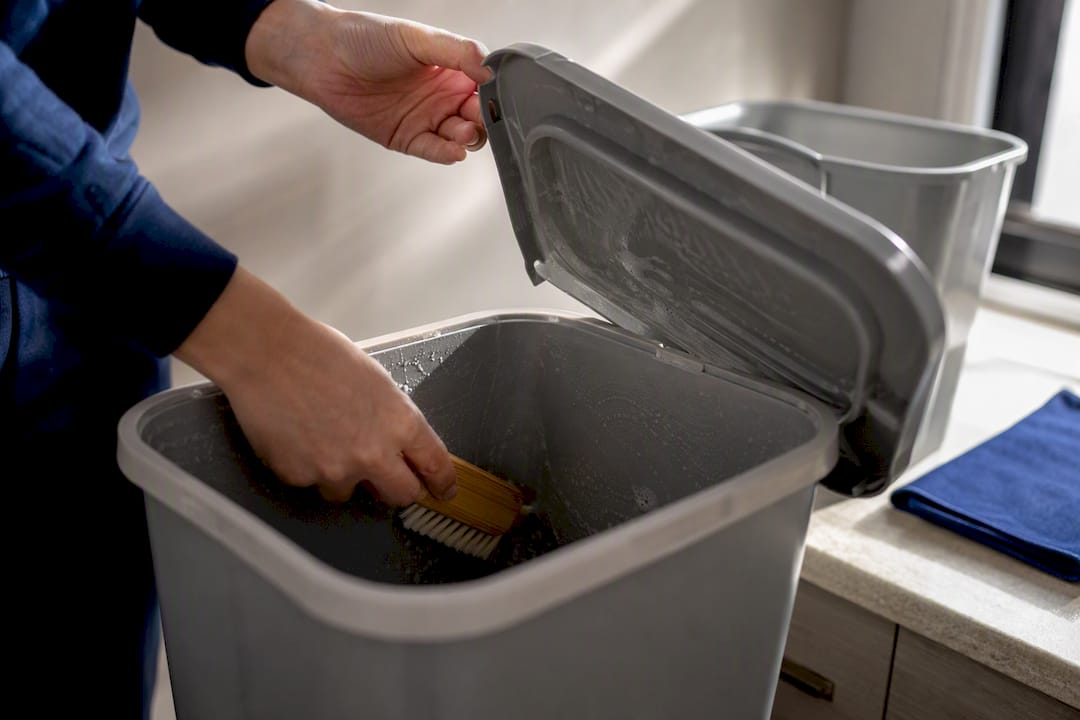
Kitchen bins get the most attention, but bathroom bins and any office recycling stations deserve the same treatment. In a workplace, this extends to communal bin areas, where multiple people dispose of food waste and general rubbish across a working week.
Outdoor wheelie bins sometimes fall outside the standard indoor deep clean scope, depending on the provider, so it’s worth checking whether that’s covered or needs to be added as an extra when you’re comparing quotes.
Closets, wardrobes and storage areas
Storage spaces accumulate dust faster than almost anywhere else in a home, largely because they’re opened, used, and closed again without ever being properly cleaned out.
A deep clean of closets and storage areas typically involves clearing shelves and rails so surfaces underneath can be wiped down properly, vacuuming the floor of the space including corners and skirting, dusting shelving units and any hanging rails, and wiping down the inside of doors and door tracks where dust and grit collect. In wardrobes specifically, this includes wiping down any built-in drawers and checking for cobwebs in upper corners that are easy to miss without a step stool.
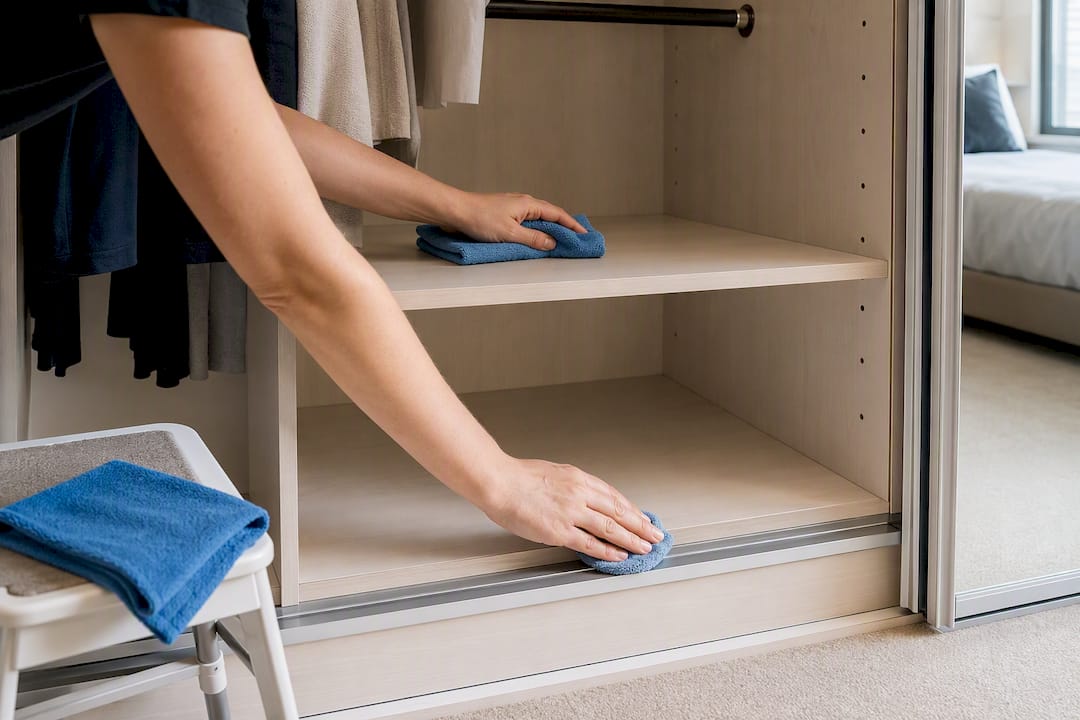
Under-stair cupboards and utility storage tend to be even worse, since they often double as a dumping ground for items rarely used. A deep clean treats these the same way as any other room: dust the shelving, wipe surfaces, and vacuum the floor properly rather than skipping it because it’s “just storage”.
Homeowners with walk-in wardrobes or dedicated storage rooms should flag these specifically when requesting a quote, since some standard packages assume smaller properties and may not automatically price in larger storage spaces.
Wall wiping and spot cleaning
Walls rarely get a mention on a basic cleaning checklist, but marks build up over months around light switches, door frames and anywhere hands regularly brush against a surface.
Deep cleaning includes spot cleaning visible marks, scuffs and handprints, particularly around doorways, light switches and stair walls where contact is highest. Cleaners typically use a soft cloth and a mild solution suited to the wall finish, since painted walls, wallpaper and tiled surfaces all need slightly different treatment to avoid damage.
Kitchens and bathrooms tend to need the most wall attention, given steam, cooking splashes and general moisture exposure. A full wall wash from floor to ceiling isn’t usually standard in a deep clean unless requested separately, but targeted spot cleaning of visible marks and grubby patches is.
If a property has textured wallpaper or delicate paint finishes, it’s worth mentioning this when booking, since some cleaning products aren’t suitable for every surface and a good provider will adjust their approach accordingly rather than risk damage.
Skirting boards, door frames and switch plates
These are the trim details that make a room look genuinely clean rather than just tidied, and they’re consistently among the most overlooked surfaces in a standard clean.
Skirting boards collect a surprising amount of dust along their top edge and cobwebs in corners, and a deep clean wipes them down along the full length of every room, not just the visible sections. Door frames get the same treatment, particularly around handle height where hands regularly make contact. Switch plates and socket covers are wiped individually, since grease and dust build up around the edges even in rooms that otherwise look spotless.
This category sits close to the high-touch point cleaning covered earlier, but it’s broader: it includes purely cosmetic trim that never gets touched by hand yet still gathers dust simply from being low to the floor or at a corner where airflow carries particles.
Offices with high footfall corridors tend to show the most wear here, since skirting boards near entrances collect scuff marks from foot traffic and trolleys. A thorough deep cleaning checklist should list these trim details explicitly rather than assuming they’re covered under general floor cleaning, since they’re easy for a quote to quietly omit.
What we prioritise in a deep clean
Most deep clean disappointments come down to a mismatch between what the client imagined and what was actually quoted. That gap is entirely avoidable, and it’s the reason a detailed scope matters more than a low headline price.
Some professional deep cleaning services use eco-friendly products as a standard part of their offering to avoid harsh chemical residue in family homes or shared offices. Reliable cleaning providers typically flag specialist work, such as heavy mould treatment or industrial-grade carpet extraction, and quote it separately rather than skipping it or overcharging for the base service.
Full details of our house cleaning, office cleaning and specialist services are worth checking before you request a quote, so you know exactly what’s standard and what’s an extra.
— Scott
Get an accurate deep clean quote from Swc-cleaning
Some cleaning providers cover house cleaning, office cleaning, end of tenancy cleaning, carpet and upholstery cleaning, and full deep cleans using eco-friendly products. Sometimes a single cleaning team handles comprehensive cleaning scopes in a single visit, with upfront quotes rather than separate charges for different specialists.
To get an accurate quote, tell us the size of the property, any particular problem areas (a neglected oven, limescale-heavy bathroom, pet hair in carpets), your preferred dates, and anything relevant about access or pets on the day. Head to Swc-cleaning to request a quote, or browse the full service list first if you want to see exactly what’s included before you book.
Sources
- Deep cleaning vs regular cleaning: what’s the difference? | TIDY Blog
- Ultimate deep cleaning checklist: a room-by-room guide | WikiHow
- Ultimate deep cleaning checklist | Martha Stewart