

Call us: 07749674445


Most homeowners get better results and fewer surprises hiring a professional pool opening service rather than doing it themselves, particularly after an unmanaged winter. A proper opening covers cover removal, equipment reassembly, filtration start-up and a full chemistry baseline, usually for £150 to £400. Start by requesting an on-site inspection or itemised quote from a provider such as Swc-cleaning before committing to anything.
TL;DR:
- A professional pool opening costs between £150 and £400, with prices increasing for green water, damage, or larger pools.
- Technicians follow a staged process from cover removal to full chemical balancing, usually taking 4 to 8 hours.
- Proper water chemistry must be balanced in sequence, with alkalinity first, pH second, then chlorine; retesting daily is essential.
- Hiring a certified, insured professional ensures thorough inspection, proper chemical application, and a detailed post-visit report.
- Avoid DIY openings that overlook critical steps, as they can lead to damage, longer recovery, or higher costs in the long run.
Table of Contents
- What does a professional pool opening service include?
- Typical costs and what changes the price
- How do you choose a reliable pool opening provider?
- What happens during a pool opening visit?
- What is the correct water chemistry sequence for a pool opening?
- When should you open your pool, and what problems add extra work?
- The case for hiring a specialist rather than doing it yourself
- Booking a pool opening with Swc-cleaning
- Sources
What does a professional pool opening service include?
A competent pool opening service follows a set sequence rather than a loose checklist. Technicians remove the cover, log its condition, and clear off standing debris before anything else happens. Skimmer baskets, return fittings, ladders and winter plugs go back in, and the pump gets reconnected, primed and checked for leaks and pressure irregularities.
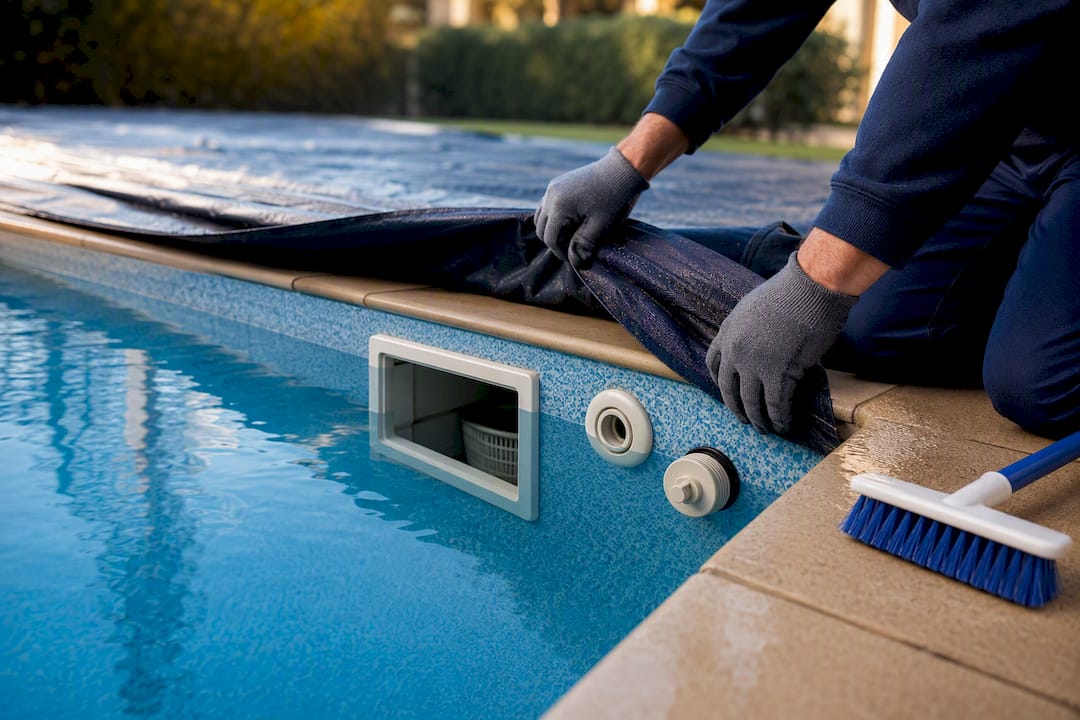
From there, the filter gets serviced, whether that means backwashing a sand filter, hosing down a cartridge, or recharging a DE filter, followed by an initial vacuum and brush of the shell. This staged approach, moving from hardware to equipment to filtration before touching chemicals, mirrors the sequence PoolServiceGuide sets out for a standard opening.
A typical scope includes:
- Cover removal, cleaning and a written condition assessment
- Reinstallation of skimmer baskets, returns, ladders and winter plugs
- Pump reconnection, priming, and a leak and pressure check
- Filter service: backwash, cartridge clean, or DE recharge as needed
- Initial vacuuming and brushing of the pool surface
- A full chemistry panel with an initial shock dose
Most providers, including Swc-cleaning, also flag when a follow-up visit is worth scheduling, particularly if the water needs a second round of balancing once the pump has run for a day or two.
Typical costs and what changes the price
A DIY opening runs roughly £50 to £150 in chemicals alone, but that figure ignores your time and the risk of getting the sequence wrong. A professional opening typically costs between £150 and £400, and that flat rate usually covers the standard scope above, cover removal through to the first chemistry balance.
What pushes the price up:
- Green or heavily discoloured water requiring extra treatment cycles
- Draining and refilling rather than treating in place
- Heater recommissioning after winter storage
- Automation system faults or salt cell servicing
- Larger pools, poor cover condition, or a longer callout distance
A pool that overwintered badly can genuinely double the job. Providers report that green-water scenarios frequently require an extra visit or a full drain-and-refill, which adds both labour and chemical cost on top of the base fee. Always ask for an itemised quote and a completion checklist before work starts, not after.
How do you choose a reliable pool opening provider?
Picking a provider on price alone is how homeowners end up with a half-finished job and a green pool three weeks later. Work through this before you sign anything:
- Ask for credentials. Insured technicians and a Certified Pool Operator qualification (or an equivalent recognised certification) separate a proper trade outfit from someone with a van and a chemical kit.
- Get the scope in writing. Compare exact tasks, the chemical types used, and whether a post-opening clean is bundled in or charged separately.
- Ask about guarantees and follow-ups. Find out whether a second visit is included if the water needs rebalancing, and who covers parts if something fails during reassembly.
- Clarify debris disposal. A torn or filthy cover generates real waste, and you want to know upfront who’s responsible for removing it.
Pro Tip: Ask any provider whether they’ll leave you a written job report with photos. If they hesitate, that’s your answer about how thorough the visit will actually be.
Red flags worth walking away from: a vague scope that won’t name specific tasks, refusal to test the water on-site, or no proof of insurance when asked directly.
What happens during a pool opening visit?
A standard visit for a properly winterised pool runs 4 to 8 hours of active labour, though the pool won’t be swimmable until the pump has circulated treated water for 24 to 48 hours afterwards.
- The technician arrives, briefs you on what’s planned, and checks the cover and any stored equipment for damage.
- The cover comes off, debris gets cleared, and equipment goes back on with a leak and pressure check.
- The filter is serviced and run for the first time this season.
- Initial water tests are taken and the shock dose goes in.
- The pump runs continuously for 24 to 48 hours to circulate the treatment.
- You get a sign-off with a written report, photos, and any follow-up recommendations.
That written report matters more than most homeowners realise. It’s your record of what was found, what was fixed, and what to watch for over the following weeks.
What is the correct water chemistry sequence for a pool opening?
Chemistry has to go in a specific order, and skipping it is the single fastest way to waste money on chemicals that don’t work. Technicians balance total alkalinity first, targeting 80 to 120 ppm, then adjust pH to 7.4 to 7.6, and only then bring chlorine up to 1 to 3 ppm, following the sequence set out in the Bestwaystore pool chemical guide.
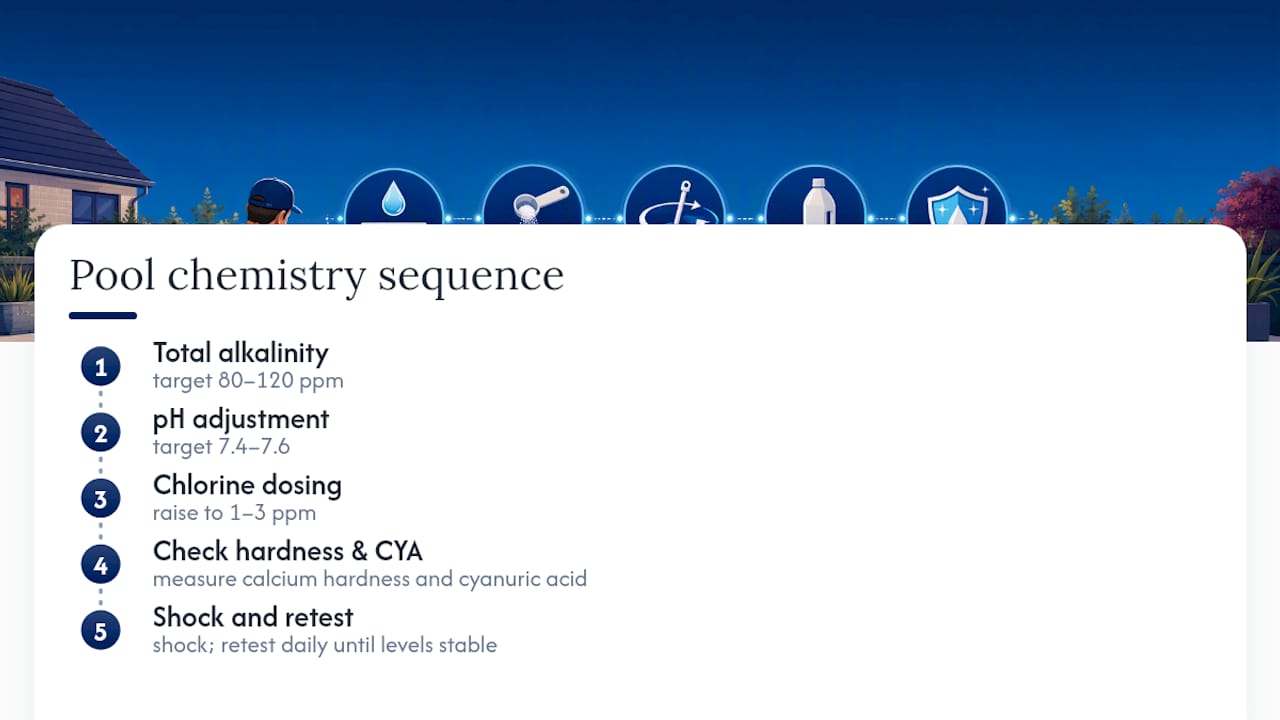
Add chlorine before alkalinity is stable and you’ll often get cloudy water and a sanitiser that barely does its job, since pH swings undermine chlorine’s effectiveness almost immediately. Calcium hardness and cyanuric acid get checked at this stage too, particularly on pools that have sat unused for months.
After shocking the water, retest daily for the first few days until levels hold steady, and don’t treat the pool as safe to swim until chlorine sits reliably within range. Alkalinity is the step amateur openings miss most often, and it’s usually the reason a pool looks hazy days after “finishing” the job.
When should you open your pool, and what problems add extra work?
Wait until overnight temperatures consistently sit above roughly 10 to 11°C before opening. Opening too early, while nights are still cold, tends to prolong chemistry correction and invites algae growth rather than preventing it.
A few scenarios turn a routine job into a bigger one:
- Green or black water, which usually needs extended shock treatment or a drain-and-refill
- Torn or failed covers that let debris and sunlight in over winter
- Low salt levels in salt chlorination systems
- Heater or pump faults only discovered once equipment is switched back on
Any of these can add a visit, sometimes two, and push costs well past the standard opening range.
The case for hiring a specialist rather than doing it yourself
Homeowners who open their own pool usually get the visible parts right, the cover, the vacuuming, and miss the parts that actually cause damage: a pump run dry for ten minutes, a heater fired up with sediment in the lines, a salt cell nobody checked. A specialist catches these before they become warranty disputes with the manufacturer.
Swc-cleaning approaches pool openings the way it approaches every job, with a written scope, a completion report with photos, and a service guarantee behind the work. If you want to see how that plays out on a property like yours, ask for references or examples from similar jobs before booking.
— Scott
Booking a pool opening with Swc-cleaning
Swc-cleaning runs pool openings as a fixed, documented process rather than a rough estimate scribbled on a job sheet. That means you get the cover removal, reassembly, filter service, and full chemistry balance in one visit, plus a written job report with photos so you know exactly what was done and what to watch for. Eco-friendly products are used throughout, which matters if you’ve got pets, children, or simply prefer not to handle harsh chemicals yourself.

To get an accurate quote, have a few details ready: your pool type and size, the cover material, and the condition it was left in over winter. That’s usually enough for Swc-cleaning to scope the job properly rather than guess at it. Green water or a damaged cover will change the quote, and it’s worth flagging that upfront rather than after a technician arrives.
Browse the full range of cleaning services Swc-cleaning offers, then request a site visit to get your pool assessed and an itemised quote drawn up before the season starts.